14 August 2026 · George du toit · 1 min read
My baby develops rashes when eating Aubergine - is this an allergy?
Aubergine and Nightshade Reactions in Infants: What Parents Need to Know Discovering a red rash on your infant after mealtime can be alarming. When aubergine is involved, many parents worry about severe food allergies. However, the medical literature and our clinical experience shows that these reactions are often harmless, manageable, and frequently outgrown. Understanding Nightshade Skin Reactions Aubergine belongs to the nightshade (Solanaceae) family, alongside potatoes, tomatoes, and pe
Aubergine and Nightshade Reactions in Infants: What Parents Need to Know
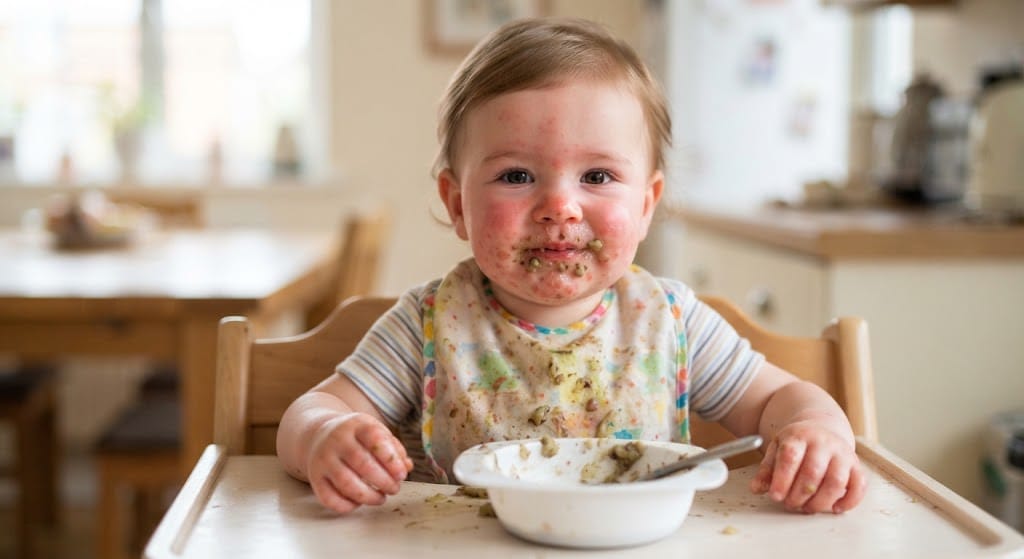
Discovering a red rash on your infant after mealtime can be alarming. When aubergine is involved, many parents worry about severe food allergies. However, the medical literature and our clinical experience shows that these reactions are often harmless, manageable, and frequently outgrown.
Understanding Nightshade Skin Reactions
Aubergine belongs to the nightshade (Solanaceae) family, alongside potatoes, tomatoes, and peppers. When infants develop skin reactions after handling or messily eating these foods, it is rarely a sign of a lifelong severe allergy.
Nightshade skin reactions can come about for different reasons:
- Immediate Contact Urticaria: This occurs within minutes to one hour of contact. It presents as localised hives, itching, or redness. These IgE-mediated reactions involve the immune system reacting immediately to specific proteins in the food. Systemic symptoms, such as wheezing, are extremely rare. The clinical history is enough to make this diagnosis, skin testing or allergy blood testing is not required.
- Delayed Allergic Contact Dermatitis (Type IV): This delayed hypersensitivity reaction appears hours to days after exposure, driven by T-cells rather than IgE antibodies. While more commonly associated with handling tomato plants or oleoresin extracts, it can occur with other nightshades and is generally seen as an occupational allergy in adults.
- Non-inflammatory Staining (Xanthoderma): Plant hairs (trichomes) from nightshades can release oily substances that stain the skin yellow. This is a harmless physical mimic of dermatitis that resolves with simple washing over a few days.
Reassurance for Parents
- Most reactions are local: Skin contact reactions are generally confined to the area that touched the food.
- They are commonly outgrown: Children frequently tolerate these foods as their immune and skin barrier systems mature.
- Anaphylaxis is rare: Simple contact reactions seldom progress to severe systemic allergies.
Please reach out to our practice if greater reassurance is required at appointment for the exclusion of troubling allergies - office@londonallergyconsultants.com or 0330 678 5168