7 February 2023 · George du toit · 1 min read
Learn about hay fever symptoms
Hayfever (Allergic Rhino-Conjunctivitis) In allergic rhino-conjunctivitis, the nose and eyes bear the brunt of the inflammatory reaction. Depending on the severity of your hayfever, symptoms and signs may include one or more of the following: * Blocked or runny nose, sometimes associated with a ‘nasal quality speech’ and reduced taste sensation. * Repetitive violent sneezing (if this is worse in the morning and occurs all year round, then consider house dust mite allergy as a cause) * Int
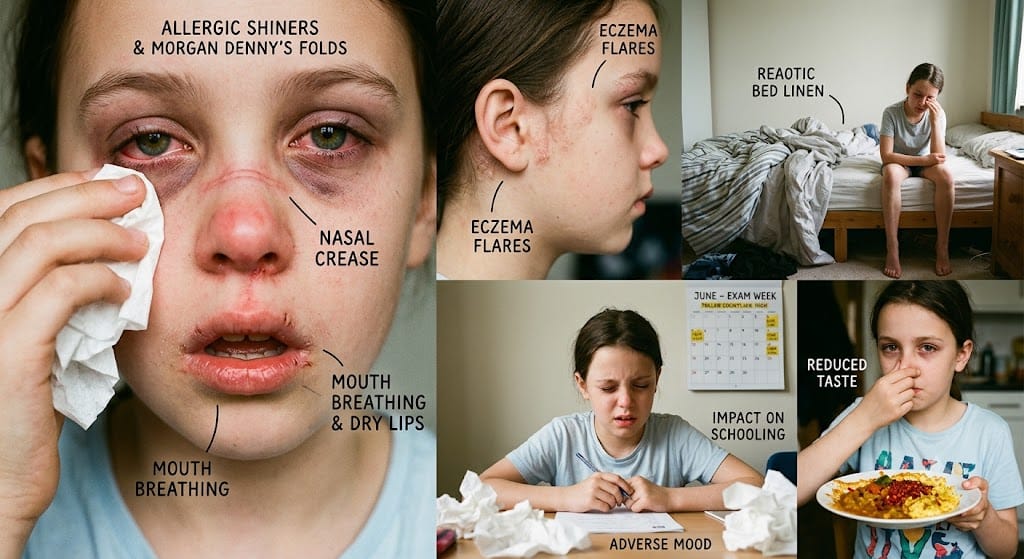
Hayfever (Allergic Rhino-Conjunctivitis)
In allergic rhino-conjunctivitis, the nose and eyes bear the brunt of the inflammatory reaction.
Depending on the severity of your hayfever, symptoms and signs may include one or more of the following:
- Blocked or runny nose, sometimes associated with a ‘nasal quality speech’ and reduced taste sensation.
- Repetitive violent sneezing (if this is worse in the morning and occurs all year round, then consider house dust mite allergy as a cause)
- Intense itching and rubbing of the nose and eyes. Rubbing of the nose may result in a clear line across the nose (called a nasal crease), and rubbing of the eyes may result in deep skin folds under the eye (called Morgan Denny’s folds); the dark areas under the eyes are sometimes called ‘allergic shiners’, making children appear fatigued.
- Eczema flares around the eyes, under the nose, and behind the ears
- Mouth breathing can result in dry teeth, which can lead to halitosis and a propensity for poor dentition.
- Ongoing rubbing of an itchy mid-face during rapid growth may be associated with a high arched palate.
- Taste is impacted when eating with a blocked nose; children may prefer salty or spicy meals as a consequence.
- Dry and cracked lips, if licked repetitively, result in a ‘lip licking’ eczema.
- Sleep patterns may also be disturbed; children with hay fever are frequently described as ‘restless sleepers’ as evidenced by chaotic bed linen in the morning.
- Mood may also be adversely affected as a consequence of poor sleep and medication use.
- Hay fever can impact schooling, particularly as exams are usually taken in the summer months when tree pollens are high.
- A post-nasal drip may result in a ‘dry hacking cough’ and ‘anti-social throat clearing noises’.
- Children with hay fever also blink repetitively and distort their itchy mid-facies, sometimes resembling a ‘nervous tick’.
At London Allergy Consultants, we will be happy to perform diagnostic tests and to discuss treatment options for any relevant seasonal and/or perenial allergens