30 January 2026 · George du toit · 6 min read
Peanut OIT in the UK - beyond Palforzia - FAQ’s
* The manufacturer of Palforzia has announced that production of the treatment will be stopping worldwide. As a result, they have advised services not to start any new patients on Palforzia after 1 April 2026. * Peanut OIT: Peanut allergy is the most extensively studied food allergen for Oral Immunotherapy (OIT), providing a robust foundation of safety and efficacy data over many years. * Our London Allergy Consultants, Prof Du Toit and Dr Foong, have made significant contributions to the lan
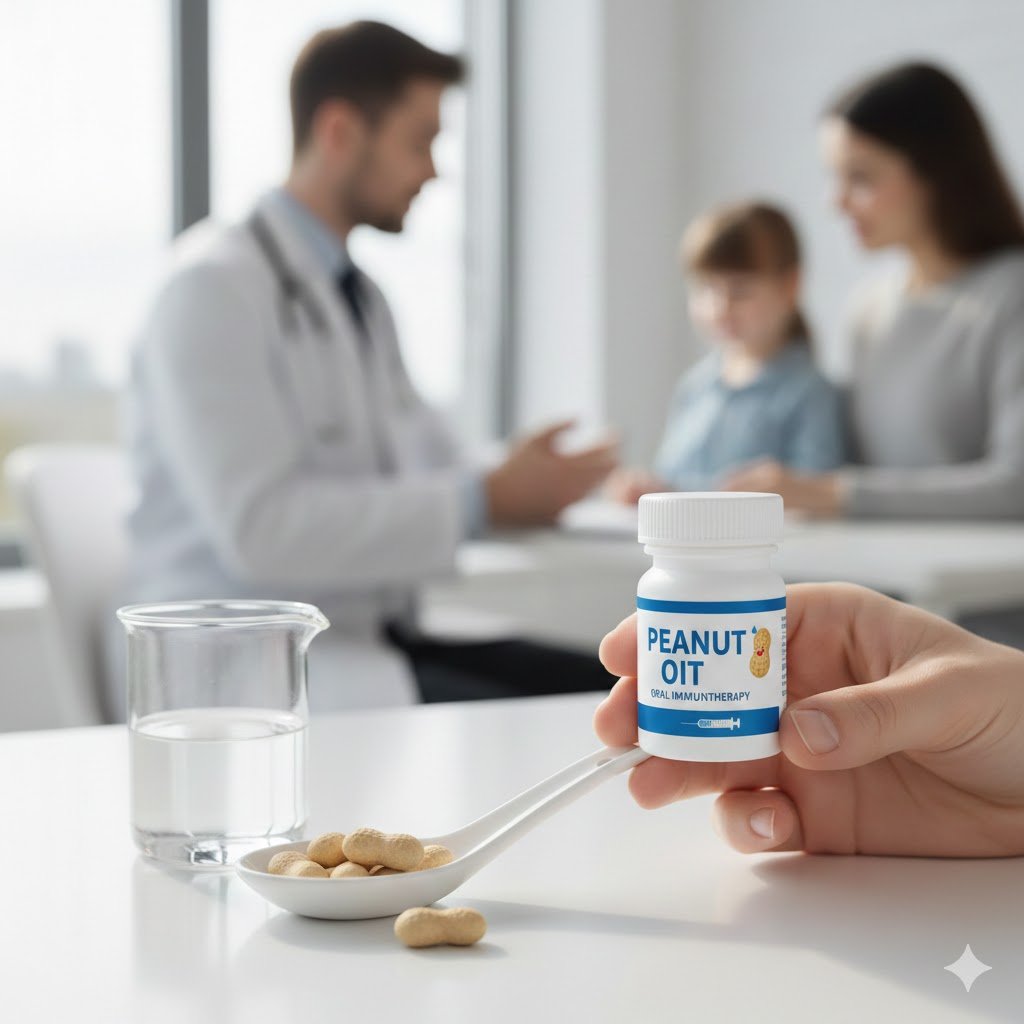
- The manufacturer of Palforzia has announced that production of the treatment will be stopping worldwide. As a result, they have advised services not to start any new patients on Palforzia after 1 April 2026.
- Peanut OIT: Peanut allergy is the most extensively studied food allergen for Oral Immunotherapy (OIT), providing a robust foundation of safety and efficacy data over many years.
- Our London Allergy Consultants, Prof Du Toit and Dr Foong, have made significant contributions to the landmark research studies in this field (see reference below).
- Peanut OIT provision: At Allergy Centre Excellence, we have significant experience with peanut OIT, having been one of the largest providers of Palforzia and non-Palforzia. Please visit our website, which outlines a plan forward for patients about to start Palforzia or already on Palforzia.
Peanut OIT:
- Peanut OIT has been recognised as a treatment option for the management of peanut allergy, as detailed in a recent EAACI Guidelines, in which Prof. du Toit was a Senior Author - EAACI guidelines on the management of IgE-mediated food allergy
- Palforzia was the first-ever FDA-approved treatment for food allergy, but is no longer in production. This was a "real first" that broke a decades-long ceiling in the field of food allergy. Securing regulatory approval provided a blueprint for the entire field, driving the OIT industry forward immeasurably and paving the way for future treatments for milk, egg, and multi-allergen sensitivities.
Are there lessons we have learnt from Palforzia that we now apply to peanut OIT?
- Safety: Prior to Palforzia, OIT often used varying grocery-store flours. Palforzia demonstrated that a pharmaceutical-grade, characterised allergen with consistent protein ratios is essential for safe, predictable up-dosing. These findings can now be applied to other non-commercialised well-characterised peanut products.
- "Bite Protection" is a Meaningful Clinical Goal: We learned that a "cure" (total tolerance) isn't necessary for success. Increasing a patient’s threshold to 600 mg or 1,000 mg (approximately 2–4 peanuts) provides a critical safety net against accidental cross-contamination, which is meaningful to the vast majority of patients and families.
- Early Intervention Yields Superior Results: Data from younger cohorts (preschoolers) suggest that the immune system is more "plastic" early on, leading to higher rates of desensitisation and better overall safety profiles than in adolescents. In some of these patients, the allergy markers may go away entirely.
- The "Dose Forgiveness" Threshold: Long-term follow-ups showed that after ~2 years of maintenance, the immune system "matures," allowing some flexibility. Occasionally, patients who miss a dose or two are less likely to lose their desensitisation.
- Treatment Burden vs. Quality of Life: Palforzia highlighted that the "burden" of daily dosing and gastrointestinal side effects must be balanced against the "fear" of accidental ingestion. It shifted the clinical conversation toward shared decision-making.
Landmark scientific publications regarding Peanut OIT to which Prof du Toit and Dr Foong have contributed:
- Oral Immunotherapy for Peanut Allergy in Children 1 to Less Than 4 Years of Age - Authors: George Du Toit, Kari R. Brown, Andrea Vereda, Anne-Marie Irani, M.D., et al for POSEIDON Study Group. Published October 23, NEJM Evid. This pivotal trial focused on toddlers (ages 1–3) and showed that 73.5% of toddlers achieved desensitisation to 600 mg, suggesting better outcomes when started earlier.
- PALISADE (Pivotal Phase 3) NEJM (2018) Vickery BP, Vereda A, Casale TB, Beyer K, Du Toit G, Hourihane JO, Jones SM, Shreffler WG, et al. This landmark trial showed that 67% of participants (ages 4–17) tolerated a single dose of 600 mg peanut protein (approx. 2 peanuts) after 1 year, compared to only 4% in the placebo group.
- ARTEMIS (European Phase 3)The Lancet Child & Adol. Health (2020) Hourihane JO, Beyer K, Abbas A, Fernandez-Rivas M, Turner PJ, Akdis C, Du Toit G, et al. This novel trial confirmed the efficacy of OIT in a European cohort. 58% of treated children tolerated a 1000 mg dose (approx. 3-4 peanuts) vs. 2% for placebo.
- ARC004 (Long-term Safety) (2021) Fernández-Rivas M, Vereda A, Casale TB, Vickery BP, Du Toit G, et al. In a long-term Follow-up. These open-label extension studies show that continued daily maintenance leads to sustained desensitisation and a decrease in side effects over time (up to 5 years).
Please list some Peanut OIT highlights:
Evolution of Care: Peanut allergy management has shifted from strict avoidance to active treatment, using controlled exposure to raise a child's reaction threshold.
- Proven Efficacy: Key trials, such as PALISADE, led to the first regulatory approvals, demonstrating that most treated children can eventually tolerate the equivalent of several peanuts.
- Early Intervention Wins: Recent research (including the IMPACT trial) shows that starting OIT at ages 1–3 can lead to "remission," in which a child remains non-allergic even after stopping treatment.
- New Treatment Standards: While pharmaceutical powders such as Palforzia have paved the way, the Allergy Centre of Excellence now uses characterised peanut products to ensure wider access and precision.
- Safety First: While OIT is highly effective, it carries a higher risk of mild-to-moderate reactions than avoidance; therefore, expert supervision and emergency preparedness remain essential.

Frequently Asked Questions
-
While effective, Palforzia required a significant commitment from both families and clinicians:
Intensive Clinical Monitoring: Every dose increase (occurring every two weeks for several months) required a multi-hour clinic visit for professional observation.
High Demands on Staff: These visits required constant, dedicated oversight from senior consultants and nursing teams.
Strict Lifestyle Rules: Daily home dosing came with "the rest hour"—a window where children had to avoid exercise, hot showers, or being unwell—which many families found difficult to sustain.
Proven Safety: It is important to note that Palforzia is not leaving the market due to concerns over safety or efficacy; its exit is purely commercial.
-
We offer (non-Palforzia) peanut OIT in the Allergy Centre of Excellence, which is the largest provider of OIT in the UK.
Ace provides unmatched Allergy Specialist care, with a team of Nurses, Allergists, Dietitians, Psychologists, and a PICU Drs covering all activity.
In ACE, we also offer a constant telephone emergency line in the event of reactions.
-
Transitioning from a brand-name pharmaceutical to natural, well-quantified peanut flour allows us to refine the OIT experience for our families. Here is why we are confident in this next step:
Same Science, More Flexibility: We use the same proven principles of incremental exposure. By using precisely measured peanut flour, we can often tailor the "up-dosing" schedule more closely to your child’s specific needs.
A Sustainable Long-Term Solution: Unlike a proprietary drug, high-quality peanut products are not subject to the same commercial exits. This ensures your child’s treatment path is stable and won't be interrupted by market changes.
Streamlined Logistics: While safety remains our top priority, we aim to make the "home dosing" lifestyle more manageable. Our team provides practical guidance on integrating treatment into your family's daily routine without the rigid constraints of a branded protocol.
Expert Oversight: Because our consultants helped pioneer the original Palforzia , we have the unique Specialist expertise required to transition patients safely to natural peanut protein while maintaining the highest clinical standards.
Worried About Allergies? Let’s Help You Get Answers
If your child is showing signs of a food, pollen, or skin allergy, early diagnosis is key. At London Allergy Consultants, our expert team provides trusted, evidence-based care tailored to your child’s needs. From testing to treatment plans, we guide you every step of the way.

London Allergy Consultants
London Allergy Consultants is a leading UK centre for diagnosing and treating food and airborne allergies in children and young people.