1 August 2026 · George du toit · 7 min read
Symptomatic teething: a paediatric allergist's approach!
It is not uncommon for parents to seek advice in clinic for infants who are experiencing 'symptomatic teething' with one or more of the following symptoms: * new-onset troublesome facial rashes, resembling or even exacerbating eczema * excessive drooling and associated peri-oral and neck skin fungal infection * disrupted sleep * poor feeding * general irritability. Teeth often erupt around the same time infants are being weaned onto solid foods and receiving routine vaccinations. Children
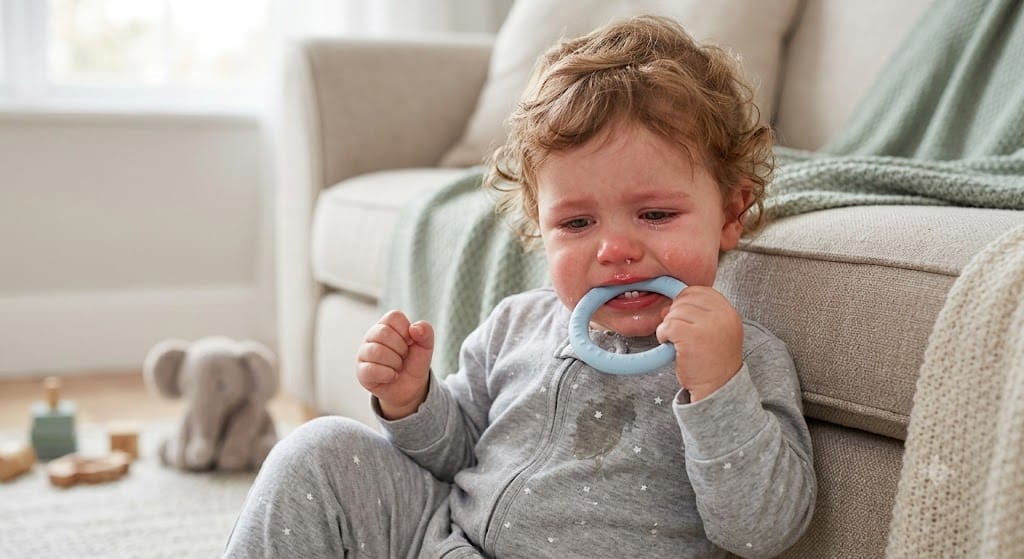
It is not uncommon for parents to seek advice in clinic for infants who are experiencing 'symptomatic teething' with one or more of the following symptoms:
- new-onset troublesome facial rashes, resembling or even exacerbating eczema
- excessive drooling and associated peri-oral and neck skin fungal infection
- disrupted sleep
- poor feeding
- general irritability.
Teeth often erupt around the same time infants are being weaned onto solid foods and receiving routine vaccinations. Children with eczema also develop their most troublesome symptom at the age of teething.
Overlapping Infant Milestones (3 to 6 Months)
It is very common for parents to feel confused when trying to identify the root cause of new symptoms like facial rashes, drooling, or irritability, as several major milestones coincide during this window:
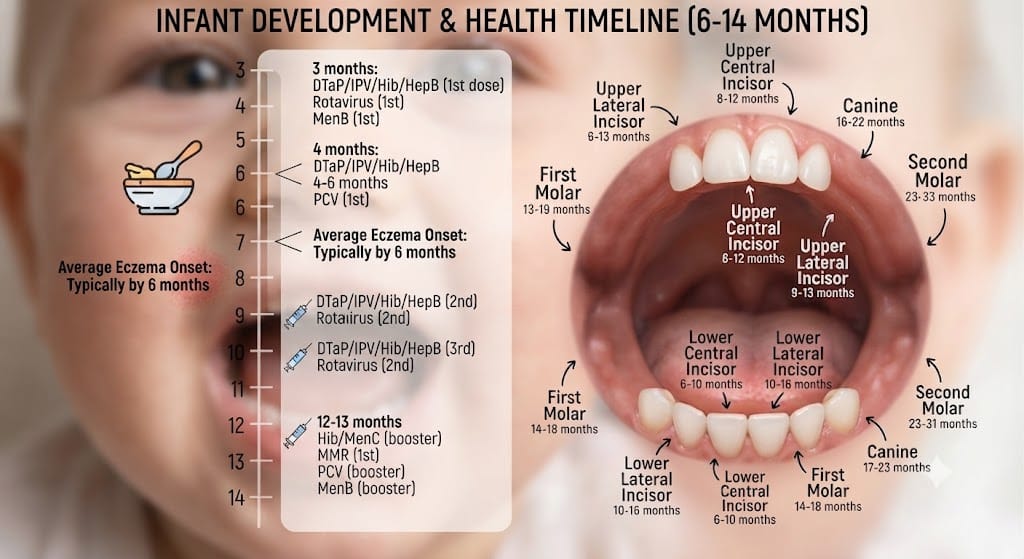
- Average Age of Weaning (UK): The NHS and the UK Department of Health and Social Care recommend introducing solid foods at around 6 months of age (and never before 17 weeks/4 months). In practice, most parents in the UK begin introducing solids between 5 and 6 months, and our research into allergy prevention encourages this from 4 months of age so as not to miss the window of opportunity!
- Atopic Eczema Onset: Peak onset typically occurs between 3 and 6 months of age, frequently presenting as dry, red, or itchy patches on the cheeks and face (which can be exacerbated by drooling).
- Primary Vaccinations: The core infant immunisation schedule is delivered at 8, 12, and 16 weeks (2 to 4 months of age).
- First Tooth Eruption: Lower central incisors emerge on average between 6 to 10 months, accompanied by localized gum tenderness and increased salivation.
With all these overlapping milestones and new-onset symptoms, exhausted parents can understandably find it difficult to pinpoint what is causing what and will often seek to exclude allergy.
Teething is a completely natural developmental milestone, but watching your baby experience sore, inflamed gums and fussiness can be challenging.
1. First-Line Comfort: Non-Pharmacologic Relief
With a vast array of teething gels, rings, and remedies on the market, knowing what is genuinely safe, effective, and aligned with British health guidance can feel overwhelming.
Both the NHS and the British Dental Association (BDA) align with clinical guidelines in recommending non-pharmacologic (non-medicinal) physical comfort measures as the safest and most effective first-line approach for soothing sore gums.
A clinical trial involving 270 children aged 8 to 36 months evaluated various teething management strategies. The study found that simple physical comfort measures provided the highest rate of parent-reported symptom relief:
- Gentle Gum Massage: Wash your hands thoroughly and gently rub or massage your baby's gums with a clean finger.
- Clean, Cool Objects: Supervised chewing on a clean, cold cotton flannel or washcloth wetted with cool water provides both texture and cold relief.
- Cuddle Therapy & Distraction: Extra physical affection, carrying, and gentle distraction were ranked among the most effective ways to ease teething distress in clinical trials.
- Chilled Teething Rings: Offer a solid silicone or rubber teething ring that has been cooled in the refrigerator. These should be the best quality material possible to avoid contact rubber irritation and the swallowing of degrading plastics.
Crucial Safety Rule: Never freeze teething rings. Frozen rings become too hard, which can bruise fragile gum tissue or cause frostbite-like cold injury. Additionally, the NHS explicitly warns never to tie a teething ring or dummy around your baby's neck, as this presents a serious strangulation hazard.
(I also recommend chewing on healthy, safe foods, often as part of the weaning regimen, as a safe alternative to plastic objects BUT
- Always Supervise: Never leave a baby unattended while they are eating or chewing on food. Keep them sitting upright in a highchair to prevent choking.
- Avoid Raw Hard Foods: Never give infants raw apple slices, raw carrot sticks, or hard raw vegetables. These do not break down easily with saliva and can snap off into sharp, hard lumps, presenting a major choking hazard.
- Avoid Rusk Biscuits with Added Sugar: Check labels on commercial teething rusks, as many contain high amounts of sugar, which can cause early tooth decay as soon as milk teeth erupt.
- No Honey Under 12 Months: Never brush teething rings or foods with honey (or give honey directly) to infants under one year old due to the risk of infant botulism.
- Beware of Whole Small Foods: Keep whole grapes, cherry tomatoes, and nuts away from infants unless cooked and thoroughly crushed/blended.)
2. When Medication Is Needed: Safe Use of Oral Analgesics
If physical comfort measures are not enough and your child’s discomfort is significantly affecting their sleep or feeding, short-term oral pain relief can be considered.
Choosing Between Paracetamol and Ibuprofen
Clinical evidence demonstrates that both paracetamol and ibuprofen are effective for acute paediatric pain when used correctly. A systematic review examining nearly 28,000 infants under two years of age found similar, exceptionally low rates of serious adverse events between the two medications (OR 1.08, 95% CI 0.87–1.33).
- Sugar-Free Infant Paracetamol (from 2 months+): The NHS recommends opting for sugar-free oral suspensions. This is the preferred option if your child is unwell, eating less, or if there are mild dehydration concerns.
- Sugar-Free Infant Ibuprofen (from 3 months+ & weighing >5kg): Highly effective for localised gum inflammation, but should only be used if your baby is well-hydrated and drinking fluids normally.
Dosing Best Practices
- Always calculate dosage based on your child’s current weight, using the oral syringe provided.
- Use the minimum effective dose for the shortest possible duration.
- Never give aspirin to children or young adults under 16 due to the risk of Reye's syndrome.
3. What to Avoid: High-Risk Products, Gels & Myths
Clinical guidelines, the Medicines and Healthcare products Regulatory Agency (MHRA), and the BDA explicitly warn against several common teething remedies due to severe safety risks, lack of efficacy, or potential harmful ingredients:
Topical Anaesthetic & Teething Gels (MHRA & NHS Stance)
- Benzocaine Warning: Health regulators (including the US FDA and ADA) strongly advise against using products containing benzocaine in children under two due to the risk of methemoglobinemia—a rare but life-threatening condition that drastically reduces the blood's ability to carry oxygen.
- Lidocaine Gels (MHRA Update): In the UK, the MHRA strictly restricted oral lidocaine-containing teething gels (e.g., Anbesol, Dentinox) to pharmacy-only (P) access. Pharmacists will only recommend them as a secondary measure if non-medicinal steps have failed. Saliva rapidly washes gels away, rendering them mostly ineffective and increasing the risk of swallowing the drug.
- Choline Salicylate Gels: UK guidance explicitly states that topical gels containing choline salicylate are contraindicated in children under 16 due to the potential risk of Reye's syndrome.
Opioids & Prescription Anaesthetics
Opioids—specifically codeine and tramadol—are strictly contraindicated in infants and young children for acute pain due to the risk of severe, life-threatening respiratory depression.
Teething Necklaces & Amber Jewellery
Amber, wooden, or silicone teething necklaces and bracelets pose severe risks of strangulation and choking (if a bead breaks loose). They are strongly advised against by the NHS and global paediatric authorities.
Homoeopathic Powders & Untested Tablets
Homoeopathic teething products are not recommended by the NHS due to inconsistent manufacturing standards, documented risk of toxic contaminants (such as belladonna), and a lack of scientifically established clinical benefit.
4. Teething vs. Infection: When "Teething" Isn't the Cause
It is common to attribute various childhood symptoms to teething, but clinical research shows that teething causes only mild, localised signs: slight gum swelling, increased drooling, mild irritability, and a subtle rise in body temperature on the exact day a tooth breaks through.
Teething does NOT cause true fever, widespread body rashes, vomiting, or severe diarrhoea.
If your child exhibits any of the following symptoms, do not attribute them to teething—seek medical evaluation from your GP or call NHS 111:
- Fever: Any temperature of 38°C or higher in infants under 3 months, a fever lasting longer than 5 days, or any temperature reaching 40°C.
- Breathing Difficulties: Rapid breathing, chest/rib retractions (skin pulling in), grunting, or stridor (harsh noise when breathing in).
- Hydration & Behaviour: Extreme lethargy, difficulty waking, inconsolable crying, or no wet nappies for over 12 hours.
- Other Red Flags: Persistent vomiting, severe ear pulling with pain, or a non-blanching rash (tested with the "glass test").
NHS & British Dental Association (BDA) Oral Care Rules
- Start Brushing Immediately: Brush as soon as your baby's very first milk tooth emerges.
- Toothpaste Guidance:
- Under 3 years: Use a tiny smear of toothpaste containing at least 1,000 ppm fluoride. (Avoid "low-fluoride" baby toothpastes below 1,000 ppm as they do not adequately protect against decay).
- 3 to 6 years: Use a pea-sized amount of toothpaste containing 1,000 to 1,500 ppm fluoride.
- "Spit, Don't Rinse": Encourage your child to spit out excess toothpaste after brushing, but do not rinse their mouth with water. Rinsing washes away the protective fluoride film left on the enamel.
- First Dental Visit: The BDA recommends taking your baby to an NHS dentist when their first tooth appears, or by their first birthday at the latest. (NHS dental care is completely free for all children under 18).
Flouride recommendations
In the UK, public health authorities, including the NHS, the British Dental Association (BDA), and Public Health England, strongly advocate the daily use of fluoridated toothpaste from the moment an infant's very first milk tooth emerges. Clinical evidence demonstrates that fluoride safely and effectively strengthens tooth enamel, preventing early childhood caries—a prevalent and entirely preventable disease. To ensure complete safety and minimise any risk of dental fluorosis (faint white marks on adult teeth caused by swallowing excess fluoride while they develop), guidance stresses strictly controlling the quantity of toothpaste rather than withholding fluoride altogether. For children under three years old, parents should brush twice daily using only a tiny smear (a thin film covering no more than half the brush head) of toothpaste containing at least 1,000 ppm fluoride, ensuring excess paste is wiped away or spat out without rinsing with water afterwards.
Summary Checklist for Parents
- Start with cold & touch: Use a chilled (not frozen) silicone ring, a cold washcloth, or a clean finger massage.
- Protect the skin: Gently pat away excess drool to prevent a chin/facial rash, and apply a thin barrier cream (like petroleum jelly) before sleep.
- Use medication judiciously: If pain disrupts sleep or feeding, use weight-based sugar-free oral paracetamol or ibuprofen.
- Skip the gels & jewellery: Avoid numbing gels containing benzocaine or choline salicylate, and never use teething necklaces.
- Brush early: Start brushing with a tiny smear of fluoride toothpaste (at least 1,000 ppm) twice daily as soon as the first tooth breaks through.
If you would like your infant to be assessed so as to exclude an allergic cause of their symptoms at this age, then please reach out to us:
0330 678 5168 or office@londonallergyconsultants.com